Best Time to Visit Coorg: Month-by-Month Weather & Season Guide
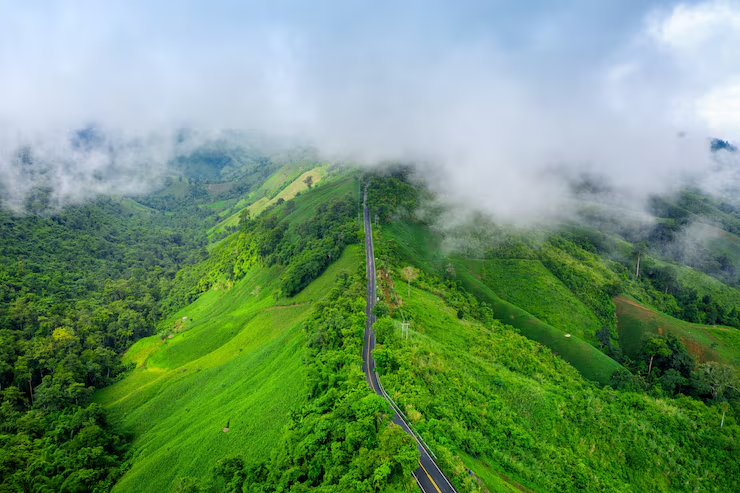
Coorg, also called Kodagu, is one of Karnataka's most-loved hill stations, and choosing the best time to visit Coorg genuinely changes what kind of trip you get. This isn't a destination with one "correct" season — it's a destination with three very different personalities depending on when you arrive.
Visit between October and March and you'll find the classic postcard version of Coorg: cool mornings, clear skies, easy sightseeing at Abbey Falls and Raja's Seat, and comfortable trekking weather on peaks like Tadiandamol. Visit between March and May and you'll catch coffee blossom season, when white flowers cover the plantations and the air smells faintly sweet, alongside warmer days that are still cooler than the plains.
Visit between June and September — Coorg's monsoon — and you'll see a different place altogether: waterfalls at full force, mist sitting low in the valleys, and homestay tariffs dropping sharply as tourist footfall thins out. There's no single best month to visit Coorg for everyone; there's a best month for what you personally want, whether that's a honeymoon by the fireplace, a monsoon photography trip, or a family sightseeing holiday. This guide breaks Coorg's weather down month by month, flags the safety points most articles skip, and helps you match the season to your specific kind of trip before you book anything.
Frequently Asked Questions
01. Is Coorg worth visiting in monsoon?
01. Is Coorg worth visiting in monsoon?
Yes, and for a specific kind of traveller. Coorg's monsoon runs from June to September, with July and August being the wettest stretch, when Madikeri regularly sees very heavy monthly rainfall and low-hanging mist can sit in the valleys for entire days. If your idea of a good trip is bright sunshine and long outdoor days, monsoon isn't for you — sightseeing windows shrink, some viewpoints close temporarily after heavy showers, and leeches appear in plantation undergrowth. But if you're drawn to atmosphere over activity, monsoon Coorg is genuinely special: waterfalls like Abbey and Iruppu run at their fullest, coffee plantations turn a deep, saturated green, and the crowds that fill Coorg every winter weekend simply aren't there. Tariffs at homestays and resorts also fall noticeably during this period, since footfall in the district drops sharply compared to peak December bookings. The trade-off is real and worth planning around rather than ignoring: driving on wet ghat roads requires caution, particularly near Madikeri, where localised landslide alerts are issued during heavy spells. Travellers who build slow, indoor-friendly itineraries with short outdoor windows — a plantation walk in a gap between showers, an evening by the fireplace — tend to enjoy Coorg's monsoon far more than those trying to force a packed, activity-heavy schedule onto rainy days. In short: worth it for nature lovers, couples, and photographers; less ideal for trekkers and first-time visitors who want guaranteed clear-sky sightseeing.
02. What is the coldest month in Coorg?
02. What is the coldest month in Coorg?
The coldest stretch in Coorg falls squarely in the winter months of December, January, and February, when nighttime and early-morning temperatures can dip into single digits in the higher plantation areas, while daytime highs stay pleasant and comfortable for sightseeing. December in particular marks the clear onset of winter, with cool, misty mornings that gradually warm into mild afternoons — ideal conditions for outdoor activities like coffee bean picking, camping, and trekking on trails such as Tadiandamol, Kodachadri, and Brahmagiri, which are far more comfortable to attempt once the monsoon mud has dried out. January tends to be the most consistently pleasant month of the cold season, with gentle morning mist over the coffee plantations giving way to comfortable, sunny days that are excellent for walking through estates or visiting viewpoints like Raja's Seat. By February, temperatures begin a slow climb toward the warmer pre-summer period, but nights still carry a distinct chill, making it a popular window for travellers who want winter's cool comfort without the very coldest mornings of December. This is also peak tourist season across Coorg, so the appealing weather comes with a trade-off: resorts and homestays fill up well in advance, especially around Christmas, New Year, and long weekends, so travellers chasing the coldest, crispest Coorg weather should book accommodation several weeks ahead rather than assuming last-minute availability, particularly if travelling during the last week of December.
03. Can I visit Coorg in April?
03. Can I visit Coorg in April?
Yes, and April is actually an underrated month for a Coorg trip if you know what to expect. By April, Coorg has moved fully into its summer season, which technically runs March through May, and daytime temperatures sit in a warm-but-manageable range compared to the intense heat of the Indian plains at the same time of year — this is precisely why so many Bangalore and Chennai travellers head to Coorg in April specifically to escape the heat rather than face it. Mornings and evenings remain notably cool and pleasant, making them the best windows for sightseeing, plantation walks, and photography, while midday heat is better spent at a resort pool, a spa session, or a leisurely lunch rather than out on the trail. April also sits right at the tail end of coffee blossom season, so travellers arriving early in the month can still catch some of the flowering that peaks in March, alongside the small green coffee berries beginning to form on the bushes — a detail many estate-stay hosts point out on guided walks. Waterfalls like Iruppu are still flowing well this early in summer, since they haven't yet dried down the way they can by peak May. The one thing to plan around is humidity, which builds gradually through April as the pre-monsoon atmosphere thickens; light, breathable clothing and a good sunscreen make a real difference. Overall, April suits families, first-time visitors, and anyone who wants warm-weather sightseeing without monsoon uncertainty or peak-winter crowds and pricing.
04. Is Coorg safe during heavy rain?
04. Is Coorg safe during heavy rain?
Generally yes on main roads and within resort or homestay grounds, but heavy rain does bring specific risks that deserve real attention rather than a quick reassurance. Coorg's monsoon, especially through July and August, brings intense rainfall that can trigger landslides on certain stretches, most notably around the Madikeri taluk and sections of the Madikeri–Mangalore highway. The Karnataka State Disaster Management Authority issues localised landslide alerts during periods of heavy rainfall, and checking these advisories on the morning of any drive is standard practice for experienced local drivers — it's a habit visiting travellers should adopt too, not skip. Within resort grounds and on well-maintained roads to Madikeri and Virajpet, conditions generally remain manageable even during monsoon, but river crossings, narrow ghat sections, and any road with recent landslide history call for extra caution and, ideally, a local driver who knows current conditions rather than a self-drive attempt by someone unfamiliar with the terrain. Outdoor activities carry their own seasonal risk: trekking trails become slippery, leeches are common in plantation undergrowth and forest paths, and some waterfall viewing platforms close temporarily after particularly heavy spells for visitor safety. The safest approach to monsoon Coorg is to build a flexible itinerary rather than a tightly scheduled one — plan indoor-friendly backup options for each day, check road and weather advisories each morning before setting out, avoid pushing through during red-alert warnings, and lean on local knowledge for anything involving hill driving. Travellers who follow these basic precautions consistently report monsoon Coorg as safe and deeply memorable, not risky.
05. Which month has the least crowd?
05. Which month has the least crowd?
For the quietest possible Coorg experience, the monsoon months of June through September consistently see the lowest tourist footfall of the entire year, with district-level data showing occupancy and visitor numbers dropping sharply compared to the December peak season. July and August specifically are the emptiest stretch, since this coincides with the heaviest rainfall and the least predictable outdoor sightseeing conditions — exactly the trade-off that keeps casual tourists away and opens the door for travellers who don't mind rain in exchange for near-empty viewpoints, easy last-minute homestay bookings, and noticeably lower tariffs. If monsoon feels like too big a compromise, the shoulder-season windows just before and after peak winter are the next best options for avoiding crowds: early October, right after the rains ease but before the winter rush fully begins, and March through early April, after the winter crowds disperse but before the summer heat peaks, both offer meaningfully quieter roads and viewpoints than the December-to-February stretch. Weekday travel makes an even bigger difference than season alone, since Coorg's crowd patterns are heavily weekend-driven thanks to its popularity as a short getaway from Bangalore, Mysore, and Mangalore — a Tuesday-to-Thursday visit in almost any month will feel calmer than a weekend visit in the same season. For travellers whose main priority is solitude, misty landscapes, and a slower pace over guaranteed sunshine, targeting July or August with realistic monsoon precautions in place is the single most effective way to experience an uncrowded Coorg.
06. Do waterfalls run in winter?
06. Do waterfalls run in winter?
Coorg's major waterfalls, including Abbey Falls and Iruppu Falls, do still flow during winter, but at noticeably reduced volume compared to their monsoon peak, since most of the region's roughly 2,700mm of annual rainfall falls between June and September and the falls gradually taper as the dry season sets in. By December and January, Abbey Falls typically presents as a gentler, more photogenic cascade rather than the powerful, roaring torrent visitors see in July and August — for many travellers this is actually the preferred version, since winter's clear skies and better light make for far better photography conditions, and the viewing platforms and walking paths around the falls are fully open and easy to access without the mud and slipperiness of monsoon season. Iruppu Falls follows a similar pattern, continuing to flow through winter and remaining a popular stop for both sightseeing and the short spiritual walk connected to the nearby temple, though again with less force than during the rains. By late summer, just before the monsoon returns in June, flow levels at both falls can drop quite significantly, making April and May the leanest months for waterfall viewing in Coorg. The practical takeaway for trip planning is straightforward: visit in winter for comfortable access, good weather, and reliably open pathways with moderate but still attractive water flow; visit during or just after monsoon (September–October) for the most dramatic, high-volume waterfall experience, accepting some trade-offs in road conditions and crowd-free access along the way.
07. Is Coorg good for a honeymoon in December?
07. Is Coorg good for a honeymoon in December?
December is widely considered one of the best months for a Coorg honeymoon, and the reasoning holds up well beyond marketing language. Winter's cool, misty mornings and comfortably chilly nights create a genuinely romantic atmosphere — think fireplace evenings, warm blankets, and the kind of crisp mountain air that makes couples want to stay in rather than rush through a sightseeing checklist. Temperatures can dip into single digits at night in December, which is precisely why so many honeymoon-focused homestays and resorts in Coorg lean into fireplace suites, candlelit dinners, and private cottage stays during this exact window. The weather is also dry and stable, meaning couples can comfortably plan outdoor experiences — a sunrise at Raja's Seat, a slow walk through a coffee estate, a private breakfast overlooking the plantations — without monsoon-season uncertainty about rain disrupting plans. The one real consideration for a December Coorg honeymoon is that this is peak season: resorts get booked out well in advance, particularly around Christmas and New Year, and prices for premium private-cottage stays rise accordingly. Couples planning a December trip should book their preferred stay at least four to six weeks ahead, and ideally earlier if travelling during the last week of the month. For couples who prioritise atmosphere, comfortable weather, and the classic misty-hill-station experience over budget or crowd-avoidance, December remains one of the strongest honeymoon windows Coorg offers all year — better suited to romance-focused travel than the wetter, moodier (but cheaper and quieter) monsoon alternative.
08. What's cheaper — monsoon or luxury winter stays?
08. What's cheaper — monsoon or luxury winter stays?
Monsoon is consistently the more budget-friendly season for a Coorg trip, and the price gap between June-to-September stays and the December-to-February peak can be substantial. Tourist footfall in Kodagu district drops sharply during the heaviest monsoon months, and homestays, resorts, and even luxury cottage properties respond with noticeably lower tariffs to offset the seasonal dip in bookings — travellers who don't mind rain can often secure the same private-cottage or premium-homestay experience that costs a winter premium for a fraction of the price in July or August. Winter, by contrast, is Coorg's peak season for a reason: clear skies, comfortable trekking weather, and honeymoon-friendly atmosphere all converge in the same window that every other traveller is also targeting, which drives both occupancy and pricing up, particularly around Christmas, New Year, and long weekends where premium resorts can be booked solid weeks in advance at top rates. Beyond room tariffs, monsoon travel often saves money in smaller ways too — transport and activity costs can be lower off-season, and negotiating better rates on multi-night stays is generally easier when a property isn't running near full occupancy. The trade-off, as covered elsewhere in this guide, is that monsoon savings come with real limitations: shorter outdoor sightseeing windows, wet-weather trekking restrictions, and occasional road caution near Madikeri. For travellers whose main constraint is budget rather than guaranteed sunshine, monsoon offers meaningfully better value; for those who want peak comfort and are willing to pay for it, winter remains worth the premium.
09. How many days are enough for Coorg?
09. How many days are enough for Coorg?
Three to four days is the sweet spot for most first-time Coorg trips, giving enough time to properly experience the region's coffee plantations, waterfalls, and viewpoints without feeling rushed, while still fitting comfortably into a long weekend from Bangalore, Mysore, or Mangalore. A typical well-paced itinerary spreads across a plantation walk and Abbey Falls on day one, Raja's Seat and a Dubare Elephant Camp visit on day two, and either a half-day trek up Tadiandamol or a slower, homestay-based relaxation day on day three, with a fourth day left free for whichever activity the weather that trip favours — an extra waterfall, a coffee-tasting session, or simply more time at the homestay. Travellers with only a standard two-day weekend can still have a satisfying trip by prioritising two or three key experiences rather than trying to cover everything, since Coorg rewards a slower pace far than a checklist-style visit; cramming five sightseeing stops into two days tends to leave visitors exhausted rather than relaxed, which somewhat defeats the point of a hill-station getaway. On the other end, travellers with five or more days available can comfortably combine Coorg with a nearby extension — Chikmagalur, Kabini, or a Kumara Parvatha trek base are all within reasonable driving distance — turning a single-destination trip into a fuller Western Ghats circuit. For a first visit focused purely on Coorg itself, three to four days remains the most commonly recommended and most satisfying duration.
010. Is Coorg better than Chikmagalur in the same season?
010. Is Coorg better than Chikmagalur in the same season?
Neither destination is objectively 'better' than the other in any given season — they suit different priorities even when the weather conditions are nearly identical, which is exactly why this comparison gets asked so often. In winter, both Coorg and Chikmagalur offer the same cool, clear, comfortable conditions ideal for sightseeing and trekking, but Coorg tends to draw a larger crowd on weekends given its slightly stronger brand recognition as Karnataka's flagship hill station, while Chikmagalur — home to Mullayanagiri, Karnataka's highest peak — often feels a touch quieter and leans more heavily into trekking and estate-stay experiences over polished sightseeing circuits. During monsoon, both regions see dramatic, waterfall-heavy transformations and similar rainfall-driven road caution, though Coorg's tourism infrastructure around monsoon travel (resort discounts, monsoon-specific packages) is somewhat more developed simply due to its larger scale as a destination. For honeymooners, Coorg generally has the edge with a wider range of dedicated romantic cottage stays and fireplace-suite properties, while Chikmagalur appeals more to travellers who want a genuine trekking-first trip built around Mullayanagiri's sunrise trail. For families, Coorg's Dubare Elephant Camp and gentler plantation walks are often easier to plan around young children than Chikmagalur's steeper, more trek-heavy attractions. The most useful way to decide isn't 'which is better this season' but rather 'which matches what I actually want to do' — and for travellers who genuinely can't choose, both destinations sit close enough together that combining them into a single extended trip is a realistic and increasingly popular option.