Chikmagalur Itinerary: Coffee Estates, Mullayanagiri & Waterfalls
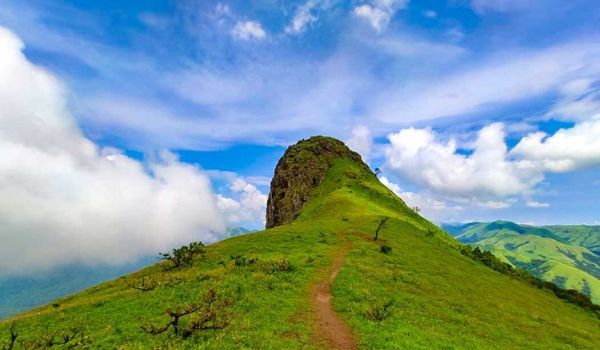
Chikmagalur is Karnataka's coffee country, and it's also home to Mullayanagiri, the state's highest peak — a combination that gives it a genuinely distinct identity from Coorg even though the two are constantly mentioned in the same breath as Bangalore weekend getaways. A well-planned Chikmagalur itinerary typically spans two to three days: a relaxed first day exploring a coffee estate on foot and settling into a homestay, a more demanding second day tackling the Mullayanagiri sunrise trek, and an optional third day extending to Hebbe Falls and Baba Budangiri for travellers with time to spare. Unlike Coorg's more polished, sightseeing-heavy circuit, Chikmagalur rewards travellers who want a slower, more nature-immersive trip built around estate stays, misty mornings, and genuine trekking rather than a checklist of viewpoints. Distance from Bangalore runs roughly 245 to 295 kilometres depending on the exact part of the district you're headed to, making it comfortably doable as a weekend trip with an early Saturday departure. This guide lays out a realistic day-by-day plan, the best season to visit, honest guidance on how demanding the Mullayanagiri trek actually is, and a direct comparison to Coorg for travellers still deciding between the two — everything needed to plan a Chikmagalur trip that goes beyond the generic "top things to do" listicle most competitors publish.
Frequently Asked Questions
01. How many days are needed for Chikmagalur?
01. How many days are needed for Chikmagalur?
Two to three days is the ideal duration for a well-rounded Chikmagalur trip, giving enough time to properly experience its three main draws — coffee estates, the Mullayanagiri trek, and at least one waterfall — without rushing through any of them. A two-day trip works well if you prioritise just the coffee estate experience and the Mullayanagiri sunrise trek, which together capture the destination's core identity, while a third day comfortably adds Hebbe Falls and the nearby Baba Budangiri hills for travellers wanting a fuller circuit. Unlike Coorg, which rewards a more relaxed, sightseeing-paced visit, Chikmagalur's appeal leans more heavily toward active experiences — the Mullayanagiri trek in particular benefits from being tackled with reasonable energy reserves rather than squeezed in after a long first day of travel, which is why most well-structured itineraries save it for day two rather than day one. Travellers with only a standard weekend (essentially one full day plus two half-days of travel) can still have a satisfying trip by focusing tightly on the estate stay and the sunrise trek, treating everything else as a "next time" addition. For travellers combining Chikmagalur with a nearby extension — Sakleshpur en route, or a longer Western Ghats circuit including Coorg — allocating the full two to three days specifically to Chikmagalur itself, before or after the extension, tends to produce a more satisfying trip than trying to compress everything into a single rushed day.
02. Is Mullayanagiri trek difficult?
02. Is Mullayanagiri trek difficult?
The Mullayanagiri trek is considerably more approachable than a serious Western Ghats climb like Kumara Parvatha, making it accessible to a much wider range of fitness levels, though it's not entirely effortless either. As Karnataka's highest peak, Mullayanagiri does involve a genuine climb, but a significant portion of the route can be covered by vehicle up to a certain point, after which a shorter, moderately steep walking or light-trekking stretch leads to the summit — a structure that makes it realistic for reasonably fit beginners, families with older children, and casual trekkers rather than requiring serious prior hiking experience. The sunrise version of the trek, which is by far the most popular way to do it, requires a genuinely early start — typically well before dawn — to reach the summit in time for the view, and this early wake-up call is often the more challenging part of the experience for many visitors rather than the physical climb itself. Weather at the summit can be notably cooler and windier than down in the estates, so carrying a warm layer even during otherwise mild Chikmagalur weather is a sensible precaution. Trail conditions can become slippery during or just after rain, so footwear with good grip matters regardless of overall fitness level. For most visitors without significant mobility limitations, Mullayanagiri is a manageable, rewarding trek rather than a serious physical challenge — it's the sunrise timing, not the climb itself, that trips up most first-timers.
03. What is the best time to visit Chikmagalur?
03. What is the best time to visit Chikmagalur?
September through February is widely considered the best overall window to visit Chikmagalur, offering cool, comfortable temperatures ideal for both estate walks and the Mullayanagiri trek, alongside clear skies that make the sunrise trek genuinely rewarding rather than obscured by mist or cloud cover. Within this window, December and January tend to be particularly popular, since cooler daytime temperatures make the strenuous climb considerably more manageable than it would be during the warmer months later in the season. Interestingly, summer (March through May) is also a genuinely popular season for Chikmagalur, not despite the heat but because of a specific angle many travellers appreciate: mornings and evenings remain noticeably cooler than the scorching plains of Bangalore or Bellary at the same time of year, making Chikmagalur an appealing heat-escape destination even in what's technically the hot season elsewhere in Karnataka. Monsoon, running roughly June through September, transforms the coffee estates into a lush, vivid green and brings waterfalls like Hebbe to their fullest flow, though it also brings the same ghat-road caution and slippery-trail considerations relevant across the Western Ghats during heavy rain, and the Mullayanagiri trek in particular becomes considerably harder and less rewarding in poor visibility. For a well-rounded first visit prioritising comfortable trekking weather, September through February is the safest recommendation; for a lush, waterfall-focused monsoon trip, plan around the rain rather than avoiding it.
04. Is Chikmagalur better than Coorg?
04. Is Chikmagalur better than Coorg?
Neither destination is objectively better — they suit genuinely different travel priorities, which is exactly why this comparison comes up so often among Bangalore weekend travellers. Chikmagalur has the clearer edge for travellers who want trekking as the centrepiece of their trip, thanks to Mullayanagiri, Karnataka's highest peak, alongside a generally quieter, less crowded atmosphere compared to Coorg's larger tourist footfall, particularly on weekends. Coorg, by contrast, offers a more complete, low-effort sightseeing package — Abbey Falls, Raja's Seat, Dubare Elephant Camp, and strong Kodava hospitality all combine into an easier, more broadly appealing itinerary that works well for first-time visitors, mixed-interest groups, and honeymooners specifically seeking a more polished, romantic experience with a wider range of dedicated cottage-stay properties. Families with young children often find Coorg marginally easier to plan around, given its gentler activities compared to Chikmagalur's more trek-heavy attractions, while solo trekkers and photographers frequently prefer Chikmagalur precisely for its quieter trails and genuine mountain-trekking identity. Cost and distance from Bangalore are broadly comparable between the two, so the decision usually comes down to trekking versus sightseeing as the trip's primary focus. Many repeat Bangalore weekend travellers eventually visit both and develop a genuine preference based on this distinction — but framing the choice as "trekking-first versus sightseeing-first" is far more useful than asking which destination is simply "better."
05. Are coffee estate homestays worth it?
05. Are coffee estate homestays worth it?
Yes, coffee estate homestays are widely considered one of the most worthwhile parts of a Chikmagalur trip, and they offer something a standard hotel or resort simply can't replicate: genuine immersion in the working life of a coffee plantation rather than just a place to sleep. Staying on an actual estate typically means waking up surrounded by coffee bushes, taking guided walks through the plantation with hosts who can explain the coffee-growing and processing process firsthand, and often getting the chance to sample freshly brewed estate coffee alongside home-cooked regional meals that hotel dining simply doesn't offer. Many estate homestays are family-run, meaning hosts bring genuine local knowledge about the best times to visit specific waterfalls, lesser-known viewpoints, and current trail conditions for Mullayanagiri — information that's often more current and reliable than generic online listings. The trade-off is that estate homestays are typically more rustic and less luxurious than a branded resort, with simpler rooms and fewer standardised amenities, which suits travellers seeking an authentic, nature-connected experience far better than those wanting five-star polish. Pricing varies considerably, from budget-friendly basic rooms to more premium plantation bungalows, meaning the estate-stay experience is accessible across a fairly wide budget range rather than being an inherently expensive choice. For travellers whose priority is genuinely experiencing Chikmagalur's coffee-country identity rather than just having comfortable accommodation, an estate homestay is consistently rated as one of the trip's highlights.
06. Is Chikmagalur good for a solo trip?
06. Is Chikmagalur good for a solo trip?
Chikmagalur is a genuinely solid choice for solo travel, and its quieter, more nature-focused character compared to Coorg actually works in favour of solo travellers seeking a reflective, less socially demanding trip. The region's coffee estate homestays are particularly well-suited to solo visitors, since hosts are generally used to accommodating individual travellers and often provide the kind of personal, conversational hospitality that can make a solo trip feel considerably less isolating than staying in a large, impersonal resort. The Mullayanagiri sunrise trek is commonly done by solo trekkers, and joining a small group at the base — even an informal one struck up with other visitors heading up at the same early hour — is easy and common, adding both safety and social contact without requiring pre-arranged company. Solo female travellers generally report feeling comfortable in Chikmagalur, particularly when choosing well-reviewed homestays and sticking to popular, well-trodden trekking routes and daylight hours for more remote excursions like Hebbe Falls. The destination's slower pace and lack of nightlife-driven crowds mean solo travellers aren't navigating the same evening-safety considerations that come up in more nightlife-heavy destinations. For travellers specifically seeking a peaceful, low-stress solo trip centred on nature, trekking, and quiet mornings rather than social activity or nightlife, Chikmagalur is a strong, comfortable pick — arguably even better suited to solo travel than the somewhat busier, more group-oriented Coorg circuit.
07. Can I visit Hebbe Falls in a day trip?
07. Can I visit Hebbe Falls in a day trip?
Yes, Hebbe Falls is easily doable as a half-day or full-day trip from a Chikmagalur base, and it's commonly added as an extension activity to a broader two-to-three-day Chikmagalur itinerary rather than requiring a separate dedicated visit. The falls are located inside coffee estate land near the Kemmangundi area, and reaching them typically involves a jeep ride through the estate followed by a relatively short walk, making the round trip from central Chikmagalur achievable within a few hours depending on traffic and estate-access timing. Many travellers combine a Hebbe Falls visit with a broader exploration of the nearby Kemmangundi hill station and Baba Budangiri range on the same day, since these attractions sit reasonably close together, turning what could be a single-purpose waterfall visit into a fuller half-day of sightseeing across the same general area. The best time to add this as a day trip is during or shortly after monsoon, when the falls run at their most impressive volume, though the jeep-and-walk access route remains viable across most of the year outside the very heaviest rain spells, when estate roads can occasionally become difficult to navigate. Booking the jeep transport in advance through your homestay or a local operator is generally recommended over trying to arrange it spontaneously on arrival, since availability can be limited during peak weekend periods. For travellers with even a spare half-day within a standard Chikmagalur weekend, Hebbe Falls is a genuinely worthwhile and easily manageable addition.
08. Is Chikmagalur crowded on weekends?
08. Is Chikmagalur crowded on weekends?
Chikmagalur does see a genuine increase in visitors on weekends, given its popularity as a Bangalore getaway, but it remains noticeably less crowded than Coorg during the same peak periods, which is actually one of the more common reasons travellers specifically choose Chikmagalur over its better-known neighbour. Popular spots like the Mullayanagiri summit and well-known coffee estate viewpoints can feel busier on Saturday and Sunday mornings, particularly during the cooler, more popular winter season, but Chikmagalur's spread-out geography — estates, trekking trails, and waterfalls scattered across a wider area compared to Coorg's more concentrated tourist circuit — means the crowding tends to feel less intense even when overall visitor numbers are comparable. Weekday visits offer a considerably quieter experience across the board, with far fewer people on the Mullayanagiri trail, easier availability at popular homestays, and a generally calmer pace at estate viewpoints — a pattern that holds true for nearly every popular Karnataka weekend destination, not just Chikmagalur specifically. Long weekends and major holiday periods (particularly around Christmas, New Year, and Dasara) see the most significant crowd increase, with premium homestays and estate cottages often booking out weeks in advance during these peak windows. For travellers specifically prioritising a quieter, more peaceful Chikmagalur experience, a weekday visit or travel just outside the major holiday periods offers a meaningfully calmer version of the same destination without needing to compromise on season or activities.
09. Coorg vs Chikmagalur: Which Karnataka Hill Station Should You Pick?
09. Coorg vs Chikmagalur: Which Karnataka Hill Station Should You Pick?
Coorg and Chikmagalur are Karnataka's two flagship hill-station getaways, sitting close enough together in both distance and general character that travellers deciding between them face a genuinely tricky choice — and most existing travel content doesn't help much, burying a thin, generic comparison somewhere inside a larger "top hill stations" listicle instead of giving the question the dedicated answer it deserves. Both destinations sit within a comfortable four-to-five-hour drive from Bangalore, both are coffee-growing regions with a strong Western Ghats identity, and both offer excellent weather for most of the year — which is exactly why the decision usually comes down to specifics rather than one destination being simply superior. Coorg leans toward a complete, easy sightseeing package: Abbey Falls, Raja's Seat, Dubare Elephant Camp, and a wide range of romantic cottage stays make it the more broadly appealing, lower-effort choice, particularly for honeymooners and families. Chikmagalur, home to Mullayanagiri — Karnataka's highest peak — leans harder into genuine trekking and a quieter, more nature-immersive coffee-estate experience. This guide breaks the comparison down clearly across the factors that actually matter for trip planning: honeymoon suitability, trekking and adventure, family-friendliness, homestay quality, crowd levels, and cost, finishing with a straightforward verdict by traveller type so you can make the decision quickly rather than reading through fifty generic "best places" articles.