Gokarna 2-Day Itinerary: Beaches, Temples & the Coastal Trek
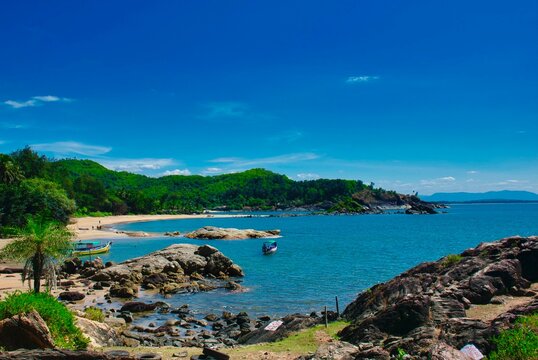
Gokarna sits on Karnataka's Konkan coast as one of South India's most distinctive beach towns, and what makes a Gokarna 2-day itinerary work so well is the way it blends two very different travel moods into a single compact trip: laid-back beach time and genuine spiritual heritage. Unlike Goa's party-first reputation, Gokarna built its identity around the Mahabaleshwar Temple — one of the seven sacred Muktikshetras in Karnataka — alongside a string of five beaches (Main Beach, Kudle, Om, Half Moon, and Paradise) connected by a scenic coastal trek that's become one of the most popular short hikes in South India. A well-planned two-day trip typically covers Om Beach and the temple on day one, then tackles the beach trek toward Kudle, Half Moon, and Paradise on day two — though the exact order varies depending on where you're staying and how much beach-hopping versus relaxing you want to build in. Distance from Bangalore is roughly 480 to 500 kilometres, making it a genuine long-weekend commitment best done with a Friday evening departure or an overnight bus or train. Whether you're planning a solo backpacking trip, a couple's beach getaway, or a small group weekend, this itinerary lays out a realistic two-day plan, including where to stay, what the trek actually involves, and how the experience changes if you're visiting during the quieter monsoon off-season.
Frequently Asked Questions
01. Is 2 days enough for Gokarna?
01. Is 2 days enough for Gokarna?
Two days is genuinely enough to get a satisfying first taste of Gokarna, though it will mean prioritising rather than trying to see everything the coastline offers. A well-structured two-day plan typically covers Om Beach and the Mahabaleshwar Temple on the first day — Om Beach in particular rewards a full afternoon, since its water sports, beachside cafes, and one of the best sunset views on the whole coast make it worth lingering rather than rushing through — followed by the scenic coastal trek connecting Kudle, Half Moon, and Paradise beaches on the second day, which takes roughly three to four hours to walk in full and delivers a genuinely different beach experience at each stop, from Kudle's laid-back backpacker vibe to Half Moon's secluded, boat-or-trek-only access. What two days doesn't comfortably allow for is the further-flung additions many travellers eventually want to add, like Murudeshwar's dramatic seaside Shiva statue (roughly 77 to 80 kilometres away) or the Yana Caves' limestone formations (around 50 kilometres out) — these genuinely deserve a third day if you want to include them without rushing. Travellers who specifically prioritise deep relaxation over beach-hopping variety sometimes find two days feels slightly rushed, since Gokarna's appeal partly lies in slowing down; if unhurried lounging is your main goal rather than covering multiple beaches, extending to three days lets you spend a full day at just one or two beaches rather than moving between several. For a solid first visit that balances sightseeing, beach time, and the coastal trek, two days works well; for a deeper, slower experience, three is better.
02. Which is the best beach in Gokarna — Om or Kudle?
02. Which is the best beach in Gokarna — Om or Kudle?
This comes down almost entirely to what kind of beach experience you're after, since Om and Kudle serve genuinely different travel styles despite sitting close together on the same coastline. Om Beach, named for the two crescents of sand that form the shape of the Om symbol when viewed from above, is Gokarna's most versatile and convenience-focused beach: it offers water sports like jet skiing, banana boat rides, and parasailing, alongside beachside cafes with reliable Wi-Fi, proper restaurants serving everything from local thalis to continental food, working ATMs nearby, and generally strong mobile network signal. This makes Om Beach the clear pick for first-time visitors, couples, and groups who want activities and modern conveniences alongside their beach time, and its northern end is also widely regarded as one of the best sunset-viewing spots on the entire Gokarna coastline. Kudle Beach, by contrast, is where Gokarna's slower, more bohemian character really lives — think budget beach shacks serving simple but satisfying food, hammocks strung between palm trees, and a wide, uncrowded stretch of sand that retains a laid-back, backpacker-friendly atmosphere even during peak season. Kudle particularly suits budget travellers, solo backpackers, and anyone who prioritises atmosphere and a slower pace over facilities and activities. If you only have time for one beach and want a well-rounded experience with activities and amenities, choose Om. If you're drawn to a quieter, more unhurried vibe and don't mind fewer conveniences, Kudle is very likely the better fit — many travellers with two days end up visiting both rather than choosing just one.
03. Is the Gokarna beach trek safe for beginners?
03. Is the Gokarna beach trek safe for beginners?
Yes, the Gokarna beach trek connecting Om, Half Moon, and Paradise beaches (sometimes extended to include Kudle and the more remote Belekan Beach) is widely considered a beginner-friendly coastal trek, though a few sensible precautions make a real difference to how safe and enjoyable it feels. The full route covers roughly six kilometres and takes three to four hours at a relaxed pace, moving along a mix of sandy beach stretches and moderately rocky coastal paths rather than technical mountain terrain, which keeps the physical difficulty well within reach of most reasonably fit beginners, including many first-time trekkers. Proper footwear matters more than people expect — flip-flops are genuinely inadequate for the rockier sections between beaches, and closed shoes or sturdy trekking sandals reduce the risk of slips considerably. Carrying enough water is essential too, since the more remote stretches of the trek, particularly around Half Moon Beach, have no shops or facilities of any kind — everything you need has to be carried in. The trek is generally considered safe for solo travellers and women, and it's commonly done by mixed groups of backpackers, couples, and families with older children, though starting early in the day is worth prioritising both for cooler walking conditions and to leave enough daylight buffer in case any section takes longer than expected. The one real safety consideration is mobile network coverage, which becomes patchy to non-existent in the more remote beach stretches — letting your accommodation know your rough plan for the day is sensible, as is trekking with at least one companion rather than completely alone if you can arrange it.
04. Is Gokarna good for solo female travelers?
04. Is Gokarna good for solo female travelers?
Gokarna has built a genuinely solid reputation as a comfortable destination for solo female travellers, and this reputation is earned rather than just marketing — the town's blend of backpacker infrastructure, spiritual tourism, and a more laid-back atmosphere than nightlife-heavy destinations creates a generally welcoming environment. The presence of established guesthouses, hostels, and beach shacks that regularly host solo travellers of all genders means solo women aren't a rarity here the way they might be in less tourism-adapted parts of coastal Karnataka, and staff at these properties are generally used to advising solo guests on which beaches and trek sections feel most comfortable at different times of day. That said, sensible precautions still apply, as they would at any beach destination: sticking to well-populated beaches like Om and Kudle after dark rather than more remote stretches like Half Moon or Paradise, which have essentially no facilities or foot traffic once the sun sets, is a good general rule. Daytime beach-hopping and the coastal trek are both considered comfortable for solo women, particularly on weekends and during peak season (October to March) when other travellers are around throughout the route. Choosing accommodation with good reviews specifically from solo or female travellers, rather than just general ratings, tends to be a useful filter, and many solo travellers find joining a small group for the beach trek — even an informal one struck up at a guesthouse — adds both safety and social enjoyment without sacrificing the independence that makes solo travel appealing in the first place. Overall, with standard beach-destination precautions, Gokarna is a genuinely comfortable choice for solo female travellers.
05. Can I combine Gokarna and Murudeshwar in one trip?
05. Can I combine Gokarna and Murudeshwar in one trip?
Yes, and this combination has become one of the most popular ways to extend a standard Gokarna trip, since Murudeshwar sits only around 77 to 80 kilometres away — roughly one to two hours by road — making it a genuinely easy add-on rather than a separate major trip. Murudeshwar's biggest draw is its dramatic seaside Shiva statue, one of the tallest in the world, set within an equally striking temple complex right on the coast, offering a completely different visual and spiritual experience compared to Gokarna's more understated, ancient Mahabaleshwar Temple. Most travellers combining the two treat Murudeshwar as a day-trip add-on to a Gokarna base — checking out of Gokarna accommodation after an early breakfast, driving to Murudeshwar for the temple visit and coastal views, and either returning to Gokarna the same evening or continuing onward, since Murudeshwar also connects reasonably well to further coastal exploration toward Karwar or the Sharavati backwaters near Honnavar. For travellers with a bit more time, extending the loop to include Honnavar's backwater boating experience alongside Murudeshwar turns a simple two-destination trip into a fuller day of varied coastal experiences — temple architecture, dramatic statuary, and calm backwater scenery all within a single extended day trip. The combination works particularly well for travellers who want their Gokarna trip to include a distinct spiritual and architectural highlight beyond the beaches, and it's flexible enough to fit into either a standard two-day Gokarna trip (as a rushed but doable day-trip add-on) or, more comfortably, a three-day extended itinerary where Murudeshwar gets a proper half-day rather than a squeezed-in stop.
06. Is Gokarna crowded like Goa?
06. Is Gokarna crowded like Goa?
No, and this distinction is actually central to why so many travellers specifically choose Gokarna over Goa in the first place. While Gokarna has genuinely grown in popularity over the past decade and does see meaningful crowds during peak season (roughly October through March) and around major holidays, it remains considerably quieter and less commercially developed than Goa's main beach belts, largely because Gokarna's core identity stayed rooted in its role as a pilgrimage town rather than a nightlife destination. There's no real Goa-style club scene or loud beach-party culture here — evenings in Gokarna tend toward beachside cafes, bonfires, and quiet stargazing rather than late-night music and crowds, which is exactly the atmosphere many travellers are specifically seeking when they pick Gokarna as a deliberate "quieter alternative to Goa." Even Om Beach, Gokarna's busiest and most developed beach, feels notably less packed and less commercially built-up than Goa's popular stretches like Baga or Calangute, and beaches like Half Moon and Paradise — reachable only by trek or boat — offer a level of seclusion that's essentially unavailable anywhere in mainland Goa. The trade-off is fewer amenities: don't expect Goa's density of restaurants, nightlife options, or water-sport variety, since Gokarna's infrastructure is deliberately more modest and spread out. For travellers who specifically want beach time without the crowds, noise, and commercial intensity of Goa, Gokarna delivers a meaningfully calmer experience, particularly on weekdays and outside the peak winter season — though it's worth noting that this gap has been slowly narrowing as Gokarna's popularity continues to grow year over year.
07. What is the best time to visit Gokarna?
07. What is the best time to visit Gokarna?
The best time to visit Gokarna is generally October through March, when the weather is dry, the sea is calm enough for comfortable swimming, and all the classic beach activities — sunbathing, water sports, the coastal trek — are at their most enjoyable and least weather-restricted. Within this window, December through February tends to be the most popular and most crowded stretch, coinciding with cooler, more comfortable daytime temperatures and the winter holiday season, so travellers wanting a slightly quieter version of peak-season Gokarna often aim for October-November or late February-March instead, catching similar weather with fewer crowds. Gokarna's monsoon (roughly June through September) is a genuinely different but increasingly appreciated alternative for a specific type of traveller: the sea becomes rough and swimming is generally discouraged due to strong currents, but the town takes on a quieter, greener, more contemplative character, with regular showers punctuated by clear breaks suitable for sightseeing and temple visits, and villa or homestay pricing dropping noticeably compared to peak season. Typical monsoon temperatures hover between 24 and 26 degrees Celsius, cooler and more humid than winter but not unpleasantly hot, and while the beach-hopping trek becomes less appealing in heavy rain, temple visits and scenic coastal drives remain enjoyable throughout. The practical takeaway: choose October through March for the classic beach-holiday version of Gokarna with full access to swimming, water sports, and trekking; choose monsoon specifically if you want a quieter, more budget-friendly, atmosphere-over-activity version of the trip and don't mind skipping the swimming.
08. Are there ATMs and network on the beaches?
08. Are there ATMs and network on the beaches?
Coverage varies quite significantly depending on which specific beach you're on, and this is genuinely useful to know before planning your day rather than discovering it once you're already there without cash or signal. Om Beach is by far the best-equipped of Gokarna's beaches for practical amenities — it has functioning ATMs nearby, decent mobile network coverage from major providers, and reliable Wi-Fi at many of its beachside cafes, making it the natural base if you need to stay reachable or handle any banking during your trip. Kudle Beach has reasonable network coverage and a handful of guesthouses and shacks with basic connectivity, though it's noticeably less developed on the amenities front than Om, consistent with its more laid-back, backpacker-oriented character. Half Moon and Paradise beaches, by contrast, have essentially no permanent infrastructure at all — no shops, no ATMs, and mobile signal that ranges from patchy to completely absent, which is precisely what gives these two beaches their appealing sense of seclusion but also means travellers need to plan ahead, carrying enough cash and water for the day and letting someone know your rough plan before heading out to these more remote stretches. The practical planning implication is straightforward: withdraw cash and handle any calls or bookings while at Om Beach or in Gokarna town itself, then treat Half Moon and Paradise as genuinely "disconnect" zones where you won't be reachable and won't have banking access — which, for many travellers, is actually part of the appeal rather than a drawback.