Udupi–Murudeshwar–Gokarna: The Karnataka Coastal Temple Circuit
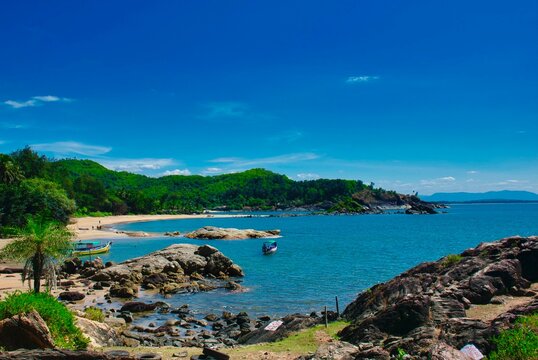
Karnataka's coastal belt is home to some of South India's most significant temple towns, and a well-planned circuit linking Udupi, Murudeshwar, and Gokarna gives travellers a genuinely complete coastal temple tourism experience that most competitor sites treat as three unrelated destinations rather than a single, well-connected trip. Udupi is home to the revered Sri Krishna Temple and the nearby Malpe Beach, offering a blend of spiritual significance and coastal relaxation right at the circuit's starting point. Murudeshwar, roughly midway along the coast, is anchored by one of the tallest Shiva statues in the world, set within a dramatic seaside temple complex that draws visitors as much for its striking visual impact as for its religious significance. Gokarna, the circuit's final stop, combines the ancient Mahabaleshwar Temple — one of Karnataka's seven sacred Muktikshetras — with a string of beaches connected by a scenic coastal trek. This circuit is particularly well-suited to families and groups planning a darshan-focused trip, since coordinating temple timings, darshan queues, and coastal transport independently is genuinely difficult without local knowledge. This guide lays out a realistic three-day route, darshan timing tips, the best local coastal cuisine to try along the way, and practical advice for making this circuit work smoothly for both younger and older travellers in the same group.
Frequently Asked Questions
01. How many days does this circuit take?
01. How many days does this circuit take?
Three days is the practical minimum for comfortably covering the Udupi–Murudeshwar–Gokarna coastal temple circuit, allocating roughly one day to each destination, which allows enough time for temple darshan, some sightseeing at each stop, and a relaxed pace rather than rushing through the route. A typical structure spreads Day 1 across Udupi's Sri Krishna Temple and Malpe Beach, Day 2 covering the drive south to Murudeshwar for its dramatic Shiva statue and temple complex, and Day 3 continuing to Gokarna for the Mahabaleshwar Temple and a chance to see one or two of its beaches before wrapping up the trip. Groups or families wanting a more relaxed pace, with additional time for coastal cuisine stops, backwater excursions near Honnavar, or simply more leisure time at each destination, often extend the circuit to four days, adding a half-day buffer that also provides flexibility in case of unexpected delays or simply wanting to linger longer at a particular temple or beach. Compressing the circuit into two days is technically possible but requires a fairly rushed pace with early starts each day, and generally doesn't leave much room for anything beyond the core temple visits themselves, which somewhat defeats the purpose of a leisurely coastal circuit. For most families and groups, three days strikes the right balance between thorough coverage and a comfortable, unhurried travel pace along Karnataka's coast.
02. What is the distance between Udupi and Gokarna?
02. What is the distance between Udupi and Gokarna?
The full driving distance covering Udupi to Gokarna, passing through Murudeshwar along the way, runs roughly 150 to 180 kilometres depending on the exact route taken, typically requiring around four to five hours of total driving time when broken into the natural stops along the coastal highway. The Udupi-to-Murudeshwar leg covers a shorter stretch, generally around 60 to 70 kilometres and roughly one and a half to two hours by road, making it a comfortable half-day drive that leaves ample time for sightseeing at both ends. The Murudeshwar-to-Gokarna leg is somewhat longer, typically around 80 to 90 kilometres and roughly two hours, following the scenic coastal highway that hugs much of Karnataka's Arabian Sea coastline. Breaking the full journey into these two natural legs, rather than attempting Udupi to Gokarna in a single long drive, is exactly why the three-day circuit structure works so well — each day's driving segment stays comfortably manageable, leaving plenty of time and energy for temple visits and sightseeing rather than exhausting the group with a single marathon drive. Road conditions along this coastal route are generally good, though monsoon-season travel (June–September) can bring heavier rainfall and reduced visibility along certain stretches, making the October-through-March window the more comfortable overall period for this specific driving circuit.
03. What are Murudeshwar temple darshan timings?
03. What are Murudeshwar temple darshan timings?
Murudeshwar's temple complex, home to its dramatic seaside Shiva statue, generally follows standard South Indian temple darshan hours, typically opening in the early morning and remaining accessible through the day with a possible midday closure window before reopening for evening darshan, though exact hours can vary by season and any special festival schedule the temple observes. Early morning visits, shortly after the temple opens, tend to offer the most peaceful darshan experience with considerably shorter queues compared to mid-morning and afternoon, when tour groups and day-trip visitors typically arrive in larger numbers. Evening visits are particularly popular for a different reason: watching sunset over the Arabian Sea from the temple grounds, with the towering Shiva statue silhouetted against the changing sky, is one of the most visually striking experiences of the entire coastal circuit, making a late-afternoon-to-evening visit worth prioritising for photography and atmosphere even if it means slightly busier crowds than the earliest morning slot. Special occasions like Shivratri bring significantly larger crowds and extended darshan hours to accommodate the surge in devotees, so travellers specifically planning around this festival should expect considerably longer queues and ideally arrive well before the temple's normal opening time. Since exact timings can shift seasonally or around specific festival calendars, checking current darshan hours locally or through the temple's own information sources shortly before your visit is the most reliable way to plan your day around them.
04. Is this circuit suitable for elderly travelers?
04. Is this circuit suitable for elderly travelers?
Yes, this circuit is generally well-suited to elderly travellers and family groups including older relatives, largely because the core activities at each stop — temple darshan, beach viewing, and coastal sightseeing — require relatively little physical exertion compared to trekking-focused Karnataka itineraries, making it one of the more accessible multi-day circuits in the state for mixed-age groups. Udupi's Sri Krishna Temple and Murudeshwar's temple complex both offer relatively easy, level access for most of their main areas, though darshan queues can involve some standing time, particularly during festival periods or peak visiting hours, which is worth factoring in for travellers with limited standing endurance. Gokarna's Mahabaleshwar Temple is similarly accessible, though the more adventurous beach-trek portion of a typical Gokarna visit isn't suitable for travellers with significant mobility limitations — elderly travellers on this circuit generally do better sticking to Om Beach, which has easier, more level access, rather than attempting the rockier coastal trek toward Half Moon or Paradise beaches. Travel between the three destinations is entirely by road, spread across manageable daily driving segments rather than long, exhausting single-day drives, which also makes the circuit considerably more comfortable for older travellers than some of Karnataka's longer, single-destination road trips. Choosing accommodation with easy access (avoiding properties with extensive stairs and no lift, for instance) and building in slightly more rest time between activities than a younger group might need both help ensure elderly family members enjoy the circuit comfortably.
05. Can this be done by public transport?
05. Can this be done by public transport?
Yes, this circuit can be completed using public transport, though it requires considerably more coordination and flexibility than travelling by private vehicle, and most families and groups planning a smooth, comfortable darshan-focused trip generally find a private vehicle meaningfully easier to manage. All three towns — Udupi, Murudeshwar, and Gokarna — are connected by both regular bus services along the Karnataka coastal highway and by rail, with Udupi and Murudeshwar both having their own railway stations on the Konkan Railway line, making train travel a genuinely viable option for at least part of the circuit. Local buses and shared autos handle the shorter distances within each town — getting from a Udupi hotel to the Sri Krishna Temple, or from Gokarna town to its various beaches, for instance — reasonably well, though schedules can be less frequent and less predictable than in larger cities, requiring more built-in buffer time between connections. The main drawback of relying entirely on public transport for this circuit is the loss of flexibility around timing, particularly for catching Murudeshwar's best sunset viewing window or arriving at Udupi's temple for the quieter early-morning darshan slot, since public transport schedules don't always align conveniently with these specific timing goals. For travellers on a tighter budget or those who enjoy the more independent, flexible pace of self-arranged public transport travel, this circuit is entirely feasible; for families prioritising a smooth, well-timed, comfortable trip, a private vehicle remains the more practical choice.
06. What is the best time for this trip?
06. What is the best time for this trip?
October through March is the best overall window for the Udupi–Murudeshwar–Gokarna coastal temple circuit, offering dry weather, calmer seas suitable for any beach time in Gokarna, and comfortable daytime temperatures for temple visits and coastal sightseeing without the heavy rainfall that can disrupt travel along this coastal highway during monsoon. Within this window, December through February tends to be the most popular and busiest stretch, coinciding with the broader winter tourist season and pleasant, cooler temperatures, while October-November and March offer a similar weather window with somewhat lighter crowds at the major temples and beaches. Monsoon travel (roughly June through September) brings genuine complications for this particular circuit — heavy coastal rainfall can affect road conditions along stretches of the highway, Gokarna's beaches become rough and unsuitable for swimming, and the overall sightseeing experience becomes considerably more weather-dependent and less reliable, making this a season best avoided for a circuit built primarily around outdoor temple visits and beach time. Festival timing is also worth planning around specifically: Krishna Janmashtami at Udupi and Shivratri at Murudeshwar both draw significantly larger crowds to their respective temples, offering a genuinely festive, culturally rich experience for travellers who want to time their visit around these occasions, though this comes with the trade-off of considerably busier darshan queues and accommodation demand during those specific dates.
07. Are there good vegetarian food options en route?
07. Are there good vegetarian food options en route?
Yes, vegetarian food options are genuinely excellent and widely available throughout this circuit, which suits it particularly well for pilgrimage-focused and family travellers, since coastal Karnataka's Udupi cuisine tradition — one of India's most well-regarded vegetarian culinary traditions — originates directly from this exact region. Udupi itself is the birthplace of Udupi cuisine, and the town offers numerous well-established vegetarian restaurants serving traditional thalis, dosas, and other South Indian vegetarian specialties near the Sri Krishna Temple complex, making it an easy and reliable stop for a satisfying vegetarian meal right at the start of the circuit. Murudeshwar and Gokarna both continue this strong vegetarian food tradition, with numerous restaurants and temple-adjacent eateries offering traditional South Indian vegetarian meals, alongside coastal Karnataka specialties that incorporate local ingredients like coconut and tamarind into vegetarian preparations distinct from the region's equally famous seafood dishes. For travellers specifically observing vegetarian dietary requirements for religious or personal reasons — common among pilgrimage-focused travellers doing this exact temple circuit — the entire route is comfortably well-served, without needing to seek out specialty restaurants or compromise on food quality. This is genuinely one of the practical advantages of this particular circuit compared to some of Karnataka's other coastal or heritage routes, where vegetarian options can occasionally be more limited outside major towns.
08. Can I add Jog Falls to this circuit?
08. Can I add Jog Falls to this circuit?
Yes, Jog Falls can be added to this coastal temple circuit as a worthwhile extension, particularly for travellers visiting during or shortly after monsoon when the falls run at their most dramatic and the addition of a genuinely spectacular waterfall provides a nice contrast to the circuit's temple-and-beach focus. Jog Falls sits inland from the coastal highway, meaning adding it requires a meaningful detour rather than a simple straight-line addition to the Udupi–Murudeshwar–Gokarna route, and the most natural way to incorporate it is either as a day-trip extension from the Gokarna end of the circuit or as an additional day inserted between Murudeshwar and Gokarna, depending on the exact route and timing that works best for your group. Given this detour adds genuine driving time and a full extra day is often the most comfortable way to include it without compressing the rest of the circuit, travellers specifically interested in combining coastal temple tourism with a monsoon waterfall stop should budget for a four-to-five-day trip overall rather than trying to squeeze Jog Falls into the standard three-day circuit. The trade-off is worthwhile for travellers who want a fuller Karnataka coastal-and-Western-Ghats combination rather than a purely temple-focused trip, though families or groups whose primary goal is a focused, darshan-centred pilgrimage circuit may prefer keeping the trip streamlined to the three core temple towns rather than adding the extra detour and travel day.